Emergency-Only Activation  •  Role-Based Access  •  Adaptive AI  •  Full Audit Trail

Your voice, when you can't speak.

VitaPing is a governed emergency identity and adaptive incident intelligence infrastructure designed for high-risk environments — enabling faster, structured response through permissioned access, full auditability, and governed AI assistance.

Built for critical response. Privacy-first. Auditable by design. AI-governed.

Not designed for surveillance, workforce monitoring, or behavioural scoring. Emergency-use only.

0.1

When identity disappears, response slows.
When information is unstructured, risk increases.

In emergencies, individuals may be unconscious, injured, disoriented, or unable to communicate. Phones may be locked. Wallets may be inaccessible. Critical medical or identity context often fails at the exact moment it is needed most.

In high-risk environments — construction sites, delivery fleets, hotels, industrial facilities, public venues, and events — this gap leads to delayed decisions, uncertainty, and avoidable exposure.

But even when information is available, it is frequently fragmented, incomplete, or poorly documented under stress. That lack of structure increases compliance risk and weakens post-incident accountability.

VitaPing closes this gap through governed emergency access and adaptive AI-assisted incident structuring — ensuring information is not only accessible, but organised, role-aware, and audit-ready when it matters most.
0.2

A governed emergency identity and adaptive AI intelligence layer.

VitaPing is not a consumer app, a tracking device, or a wearable gadget.

It is a safety infrastructure layer designed for organisations with a duty of care — activating only during verified emergencies, revealing only what is authorised, and recording every action for accountability and audit.

Emergency-only activation

The system remains dormant until a verified emergency trigger occurs. No background access, no passive monitoring, and no continuous identity exposure. Activation is event-based, controlled, and logged.

No continuous tracking

VitaPing does not monitor movement, behaviour, or location outside emergency workflows. Location capture occurs only at verified activation and only for structured response coordination.

No public visibility of sensitive data

Personal and medical information is never displayed publicly. Access is restricted to authorised responder roles and governed by policy-based permissions.

Permissioned access based on responder role

Information dynamically adapts based on verified role (e.g., first aider, paramedic, supervisor, police). The AI layer prioritises context relevant to that role without expanding access boundaries.

Incident-centric design, not user browsing

The platform is structured around incident workflows, not profile browsing. Responders cannot freely explore user data; access is limited to the active emergency context.

AI-assisted clarity and auditability — never autonomous decision-making

VitaPing's adaptive AI structures timelines, highlights critical context, validates documentation completeness, and generates review-ready summaries. It does not diagnose, prescribe, predict outcomes, or replace professional judgement. All AI-assisted outputs are reviewable and logged.

VitaPing includes a governed, continuously improving AI support layer that enhances response speed, documentation integrity, and audit readiness — without introducing surveillance, behavioural scoring, or automated decision control.

1.0

Designed for real-world emergencies.

01

Emergency Activation

A bystander or authorised staff member triggers emergency mode instantly — via NFC tap on the VitaPing Band. No app installation required. No personal or medical data is shown publicly. Every activation is logged and timestamped.

02

Controlled Responder Access

Only verified responders can access essential identity or medical context — based on role, justification, and policy. The AI layer prioritises role-relevant information without expanding visibility beyond permission boundaries.

03

Incident Intelligence & Audit

The incident is recorded with timestamps, access history, notes, and attachments — creating a reliable, auditable record. Adaptive AI structures events into chronological review-ready summaries and flags incomplete documentation before closure.

1.5

Intelligent Infrastructure — Not Just Identification.

Emergency identity alone is not enough. VitaPing embeds a governed, adaptive AI layer that transforms emergency data into structured, role-aware incident intelligence.

This allows organisations to move from reactive response to accountable, audit-ready clarity — without introducing surveillance, profiling, or automated decision-making.

Role-Adaptive Views

Information adapts to responder role and policy.

Structured Timelines

Actions, notes, and timestamps organised automatically.

Documentation Integrity

Missing or incomplete fields flagged before closure.

Audit-Ready Outputs

Clean exports prepared for review and compliance.

2.0

Built for environments where response time matters — powered by adaptive, intelligent AI.

Construction & Industrial

High-risk environments requiring immediate incident response, structured documentation, and regulatory accountability. Adaptive AI continuously strengthens safety workflows across sites.

Learn more →

Logistics & Delivery Fleets

Protecting distributed teams across mobile and remote locations. Intelligent AI assists in structuring incident reports, validating completeness, and generating review-ready summaries — without enabling continuous tracking.

Learn more →

Hotels & Hospitality

Privacy-first emergency response for guests and staff. AI-assisted documentation ensures clarity and duty-of-care compliance without guest surveillance.

Learn more →

Tourism, Airports & Public Attractions

Adaptive emergency infrastructure for high-traffic environments. Structured cross-role clarity and travel insurance partnership models available.

Learn more →

Events & Large Venues

Coordinated emergency response for crowds, temporary infrastructure, and dynamic operations. Adaptive AI structures multi-role incident activity into clear, chronological timelines.

Learn more →

Public Safety & Emergency Services

Enhanced, controlled information access for first responders and authorities. Intelligent AI organises field inputs into structured incident intelligence — supporting clarity and audit-ready trails.

Learn more →

Across every sector, VitaPing transforms emergency identity into adaptive, intelligent incident infrastructure — continuously improving workflow clarity while remaining governed, permissioned, and fully auditable.

3.0

The VitaPing Band.

VitaPing Band — Emergency Identity Device
Powered by Adaptive AI Infrastructure

A passive emergency identity device powered by adaptive incident intelligence infrastructure.

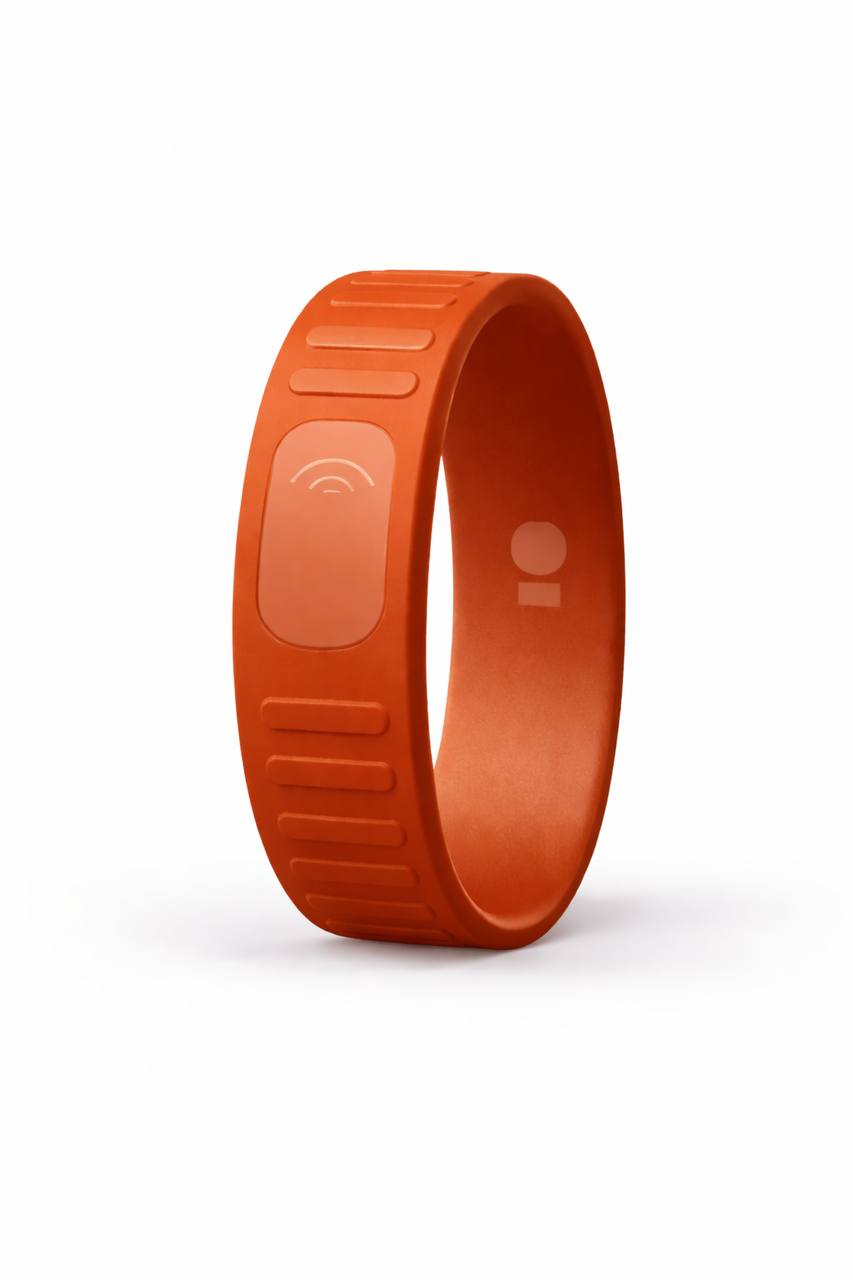
The VitaPing Band is a passive, always-ready emergency identity device designed for high-risk, regulated, and high-responsibility environments.

It contains no batteries. No active tracking. No continuous transmission. It activates only during verified emergency situations — and works in coordination with VitaPing's governed, adaptive AI incident intelligence layer.

This is not a wearable gadget. It is emergency infrastructure.

  • No batteries. No charging. No interaction required.
  • Emergency-only activation — never continuous tracking.
  • Always available when needed.
  • Resistant to harsh environments and industrial conditions.
  • Works with NFC-enabled responder devices.
  • Designed to integrate with VitaPing's adaptive AI incident layer.

The Intelligence Layer

The intelligence does not live in the band. The band activates the infrastructure.

No GPS tracking. No behavioural monitoring. No surveillance.
Emergency-only. Permission-based. Fully auditable.

4.0

A complete emergency identity platform — powered by adaptive AI infrastructure.

This is not a single device. It is a complete emergency identity and incident intelligence ecosystem. Each layer activates only when required, reveals only what is justified, and logs every action for institutional accountability.

VitaPing remains dormant until a verified emergency is triggered. There is no background monitoring. No passive tracking. No continuous data collection.

Activation can be triggered by a bystander, authorised site staff, or a verified responder. Once activated, the system transitions into structured emergency mode — initiating secure access protocols and adaptive incident structuring.

Essential medical and identity information becomes available only within verified emergency scope. Context may include critical allergies, blood type, emergency contacts, role-relevant site data, and pre-approved medical notes.

Adaptive AI prioritises context based on responder role and incident type — reducing cognitive overload while maintaining strict permission controls.

Different responders require different levels of context. VitaPing enforces least-privilege access so that each role sees only what is needed — nothing more. First aiders see medical context. Supervisors see incident records. Police see identity verification and access logs.

Every access session is logged, time-bound, incident-specific, and reviewable.

Every incident generates a structured digital record. The system automatically logs: access history, timeline of actions, notes and attachments, media uploads, location data (when justified), and role interactions.

Adaptive AI continuously structures incident data into chronological, review-ready summaries — identifying missing documentation and improving report integrity across deployments.

This is governed AI — never diagnostic, never autonomous decision-making.

VitaPing includes a governed, adaptive AI support layer designed to enhance — not replace — professional judgement. It structures complex incident information, identifies documentation gaps before closure, highlights critical context relevant to responder role, and standardises reporting across sectors.

All AI assistance is governed, permissioned, and fully logged. It never diagnoses, never decides, never acts autonomously.

5.0

Security & Governance

Built to protect people, organisations, and responders — with privacy-first controls, emergency-only access, and governed AI.

Zero Public Exposure

Bystanders cannot view personal, medical, or identity data under any circumstances.

VitaPing is designed so that public scans never reveal private information. In the most stressful moments, the system prevents accidental exposure by default — no names, no medical notes, no contact details.

  • Prevents: Accidental data exposure, privacy violations, identity theft risk
  • Enables: Safe bystander activation, public-space deployment
  • Why it matters: Safety infrastructure must protect individuals — even in emergencies

Emergency-Only Activation

The platform remains dormant outside emergency workflows — no passive tracking, no "just in case" browsing.

VitaPing does not operate continuously. There is no background access, no passive monitoring, and no "always-on" surveillance. The platform only reveals context when an incident exists and access is justified.

  • Prevents: Surveillance perceptions, misuse of data outside emergencies
  • Enables: Clear legal basis for access, strong workforce adoption
  • Why it matters: Organisations can deploy at scale without turning safety into surveillance

Audit Trails

Every access, action, note, attachment, and AI-assisted output is logged, timestamped, and immutable.

VitaPing creates an incident record that is defensible. Every interaction is tied to a specific incident ID, recorded with time, role, and justification — producing audit-ready documentation.

  • Prevents: Documentation gaps, unlogged access, missing evidence
  • Enables: Legal defensibility, regulatory inspection, insurance compliance
  • Why it matters: One mismanaged incident record can cost more than the entire deployment
AI Governed

Governed AI Assistance

Adaptive AI operates only within verified incident contexts — assisting responders without autonomous authority.

The AI layer is designed to reduce documentation errors and improve clarity under stress. It does not replace decisions, and it cannot function outside a verified incident context.

  • Prevents: Black-box automation risk, unbounded AI access, surveillance repurposing
  • Enables: Faster, clearer reporting; consistent documentation; adaptive workflow intelligence
  • Why it matters: This is how VitaPing becomes the world's first governed, adaptive AI emergency identity layer

Role-Based Access Control

Least-privilege access ensures responders only see what they need — no more, no less.

Different responders require different levels of context. RBAC enforces strict boundaries so the right person gets the right information, and nothing else. First aiders, paramedics, supervisors, and police each operate within defined access scopes.

  • Prevents: Over-access, curiosity browsing, misuse
  • Enables: Confident deployment at scale, regulatory approval
  • Why it matters: RBAC is the difference between "a wearable" and real safety infrastructure

Incident-Centric Design

No global browsing. Access is always tied to an incident with full traceability.

VitaPing is not a consumer directory and not a searchable database. Access happens because something happened — not because someone wanted to look. This architectural constraint prevents systemic misuse.

  • Prevents: Mass browsing, workplace misuse, untraceable access
  • Enables: Clear governance logic, safe enterprise adoption, public-sector compatibility
  • Why it matters: Incident-centric architecture is how you scale trust

Offline-Resilient Access

Responders can retrieve essential emergency context even in low-connectivity environments.

Emergency infrastructure must not fail when signal drops. VitaPing is designed to function in underground sites, industrial basements, remote highways, and high-density network congestion. Essential context can be accessed offline, with data synchronising securely once connectivity restores.

  • Prevents: Deployment failures in field conditions
  • Enables: Reliable operation across construction, logistics, remote events
  • Why it matters: A safety system that fails in the field is not a safety system

Data Minimisation by Design

Only the minimum necessary emergency context is stored and revealed — nothing extra.

VitaPing reduces risk by collecting less, revealing less, and limiting exposure by default. Data is structured to be useful in emergencies — not "nice to have" profiles.

  • Prevents: Over-collection, privacy liability, increased breach impact
  • Enables: Faster legal/compliance approvals, higher workforce trust
  • Why it matters: The safest data is the data you never needed to store

Tamper-Resistant Evidence Capture

Photos, videos, notes, and attachments are timestamped and tied to incident history.

All media uploaded during an incident is cryptographically bound to that incident's immutable record — preventing tampering, retroactive modification, or disassociation from the original event context.

  • Prevents: Evidence tampering, chain-of-custody gaps
  • Enables: Legally defensible records, insurance documentation
  • Why it matters: Media without a chain of custody is not evidence

Compliance & Standards

Designed to align with GDPR principles, UK DPA requirements, UAE Personal Data Protection Law, and international AI governance frameworks.

VitaPing is not a medical device and does not provide diagnosis, treatment recommendations, or clinical decision support.

VitaPing is not designed for surveillance, productivity monitoring, insurance underwriting, behavioural scoring, or population tracking.

6.0

Adaptive Incident Intelligence — Governed by Design.

Not "AI-Powered." AI-Governed.

VitaPing embeds a governed AI assistance layer that enhances clarity, strengthens audit readiness, and structures emergency information in real time — without diagnosing, predicting outcomes, or replacing professional judgment.

Most systems bolt AI onto existing workflows. VitaPing built its intelligence layer around governance, emergency context, and role-based control from the start. The AI layer activates only during verified incident workflows. It does not operate passively, continuously, or outside emergency context. It enhances structure — not authority.

01

Incident Timeline Structuring

Automatically organises actions, timestamps, notes, and attachments into a clear chronological sequence for review.

02

Critical Context Highlighting

Elevates high-priority information based on responder role and organisational policy — ensuring important details are not missed under stress.

03

Documentation Completeness Detection

Flags missing fields, incomplete handovers, and required entries before an incident can be closed.

04

Structured Handover Summaries

Generates clear, role-appropriate summaries for EMS, police, supervisors, or compliance teams — always requiring human confirmation.

05

Audit-Ready Packaging

Formats incident records into structured exports suitable for internal review, regulatory audit, or insurance documentation.

06

Adaptive — Without Surveillance

Adapts to the environment type, the responder role, and the incident stage — ensuring each role sees structured, relevant information without expanding visibility beyond permission boundaries.

AI Operates Within Strict Boundaries

The VitaPing AI layer is governed by design. It activates only during verified emergency workflows, operates within role-based access controls, and cannot browse user histories, access unrestricted identity data, or function outside incident context.

Clear Boundaries. No Exceptions.

  • Does not diagnose medical conditions
  • Does not recommend treatments
  • Does not predict outcomes
  • Does not replace professional judgment
  • Does not provide clinical decision support
  • Does not conduct behavioural scoring
  • Does not enable workforce productivity monitoring
  • Does not perform continuous tracking
  • Does not create risk profiles on individuals

Its sole purpose is to enhance clarity, accountability, and documentation integrity during emergency response.

AI Assistance by Role

Paramedic / EMS

  • Clear timeline of events
  • Highlighted medical context (within authorised access)
  • Structured handover summary

Police / Public Safety

  • Chronological action log
  • Structured evidence documentation
  • Access history tracking

Yard Master / H&S Lead

  • Missing documentation alerts
  • Compliance export preparation
  • Structured incident closure

Site Supervisor / Duty Manager

  • Escalation confirmation
  • Role-based information display
  • Policy-aligned prompts
6.5

A New Category in Emergency Infrastructure.

VitaPing is the first emergency identity platform to combine:

Incident-centric architecture
Emergency-only activation
Role-based adaptive information delivery
Governance-bound AI assistance
Immutable audit trails
Zero continuous tracking design

This positions VitaPing as infrastructure — not an app, not a wearable, and not a monitoring tool — but a governed intelligence layer for emergency response environments.

Built for institutional deployment. Designed for long-term regulatory trust.

6.0

Responsible AI & Ethics

Powerful, adaptive intelligence — governed by strict boundaries.

VitaPing's adaptive AI capabilities exist to enhance clarity, governance, and auditability during verified emergency incidents.

They do not diagnose conditions. They do not suggest treatments. They do not predict outcomes. They do not replace professional judgement.

The system is architected so AI cannot be repurposed for surveillance, tracking, behavioural scoring, or performance monitoring. AI operates only within incident scope, role-based permissions, and documented governance policies.

What VitaPing is NOT

Not for Surveillance

VitaPing does not track individuals, monitor movement, or operate continuous visibility.

  • No workforce tracking
  • No location monitoring outside emergency context
  • No behaviour observation

Not for Productivity Monitoring

The platform does not analyse worker efficiency, attendance, or performance. Shift analytics, performance KPIs, and attendance records are outside system scope.

Not for Insurance Underwriting

VitaPing is not a risk scoring engine or actuarial data source. No premium adjustment analytics, risk profiling, or claim prediction capabilities.

Not for Behavioural Scoring

The system does not generate personal risk scores or behavioural ratings. No workforce ranking, safety scoring of individuals, or risk labels.

Not for Population Tracking

VitaPing does not operate as a registry or public database. No mass identity lookup, public search directories, or identity aggregation systems.

Our Ethical Commitments

  • Privacy-first architecture
  • Least-privilege access control
  • Explainable AI outputs
  • Logged and reviewable AI assistance
  • Emergency-only operational scope
  • Independent governance oversight ready

VitaPing is designed to meet enterprise, government, and regulatory expectations for responsible AI deployment in critical infrastructure environments.

7.0

Implementation & Deployment

Structured rollout. Governed activation. Adaptive AI aligned from day one.

Pilot Program

VitaPing pilot deployments are structured validation programs — designed to test operational fit, governance controls, responder workflows, and adaptive AI configuration before full-scale rollout. This is not a software trial. It is a controlled implementation validation phase.

What we need from you:

  • Site details and operational structure
  • Responder roles and hierarchy
  • Deployment scope (single site / multi-site / regional)
  • Existing emergency protocols
  • Compliance requirements (internal or regulatory)

Training

Minimal training required. VitaPing is designed for clarity under stress. 30–60 minute responder onboarding, admin governance session, AI boundary explanation, and incident simulation walkthrough.

01

Week-by-week pilot timeline

Structured 4-week validation covering configuration, simulation, live testing, and evaluation.

02

Minimal friction integration

Works with NFC-enabled devices. No hardware servers. No background tracking. Secure cloud deployment.

03

Comprehensive support

Dedicated implementation lead, governance configuration support, sector-specific optimisation, and post-pilot executive reporting.

Validate Before You Scale

Deploy VitaPing in a structured pilot and measure real-world improvement in response clarity, governance, and audit readiness.

8.0

Pricing

Structured for pilots. Scalable for enterprise. Designed for duty-of-care organisations.

VitaPing pricing is built around controlled pilot programs and phased enterprise rollouts. We do not sell consumer subscriptions. We deploy safety infrastructure.

Flexible funding models are available, including employer-sponsored deployments, government-backed programs, insurance-supported models, event-based temporary activation, and sector-wide framework agreements.

No long-term lock-ins. Structured, measurable, scalable.

1

Initial Consultation

Sector discussion, deployment scale, governance requirements

2

Pilot Proposal

Timeline, configuration scope, AI boundary definition, pricing breakdown

3

Pilot Validation

Measured evaluation, compliance reporting, executive review

4

Rollout Agreement

Scaled pricing, multi-site structure, governance lock-in